Jamestown, with Usshertown the oldest district of Accra, is home to the new fishing harbour, funded by a Chinese grant of 60 million dollars and commissioned on 13 September 2024. It includes a 200-capacity fish market, a 60-tonne ice plant and a 200-tonne cold store. According to an analysis published in The Conversation in 2024, Ghana’s artisanal fleet grew from about 8,000 canoes in 1990 to 13,650 in 2017, while landings of small pelagic fish fell by 59% between 1993 and 2019. Ghana imports more than 600,000 tonnes of fish a year, according to an SFMP programme study reported in 2018, and fishing employs about 10% of Ghanaians.
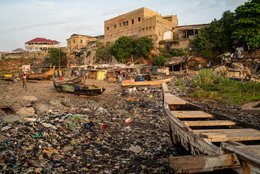
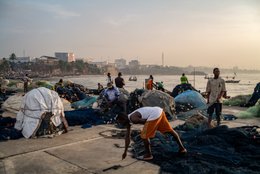
At Jamestown, a fishing district of Accra, pirogues rest on a shore strewn with plastic waste. The district lies just east of the Korle Lagoon, where the Odaw empties, the main drainage channel for more than 80% of the city. A University of Ghana researcher reports plastic almost everywhere in the river, and microplastics that then reach the Gulf of Guinea (JoyNews, June 2026). Ghana produces about 840,000 tonnes of plastic waste a year; less than 10% is recycled and about 9% ends up in the ocean, according to the Ministry of Environment (2022). Fishers at Apo, in the Western Region, say they bring up bottles and bags in their nets (GNA, 2025).
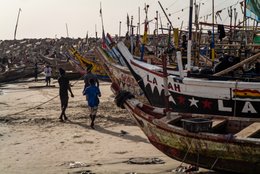
Fishermen Walking among the Pirogues Hauled onto the Sand
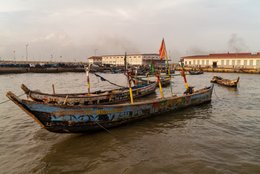
Harbour Pirogues in Warm Light, Red-Roofed Buildings
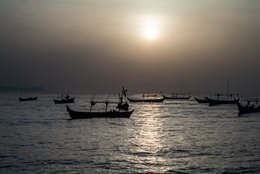
Hazy Sun over the Sea, Silhouettes of Pirogues
Jamestown Beach Overrun by Plastics beneath a Hazy Sky
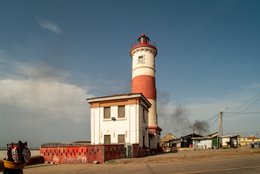
Jamestown Lighthouse and Keepers' Building at a Courtyard Corner
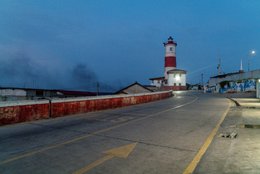
Jamestown Lighthouse and Smoke over the Coastal Road at Dawn
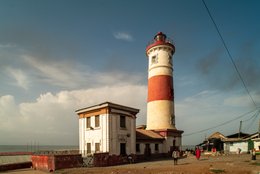
Jamestown Lighthouse from the Esplanade, Sea on the Horizon, Passers-by
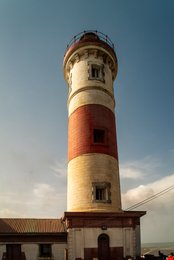
Jamestown Lighthouse Tower, Windows and Red Lantern, Vertical Shot
Net Mender Bending over the Nets, Beach and City in the Haze



 "Get Link")


 "Get Link")
 "Get Link")
 "Get Link")
 "Get Link")
 "Get Link")
 "Get Link")
 "Get Link")
 "Get Link")