On the banks of the Yamuna River in Agra, Uttar Pradesh, India, the Taj Mahal is a white marble mausoleum commissioned in 1631 by Mughal emperor Shah Jahan after the death of his wife, Mumtaz Mahal. Construction began in 1632 under a board of architects led by Ustad Ahmad Lahori and employed some 20,000 artisans. The mausoleum was completed in 1648 and the rest of the complex in 1653. Rising 73 metres and framed by four minarets, it stands within a 17-hectare site that includes gardens and a mosque. It also holds the tomb of Shah Jahan. Listed as a UNESCO World Heritage Site in 1983, the monument welcomes several million visitors every year.
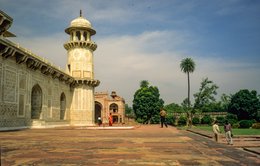
Terrace of the Tomb of Itimad-ud-Daulah and Red Sandstone Gateway
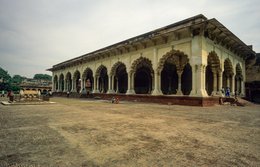
The Diwan-i-Aam, Hall of Public Audience
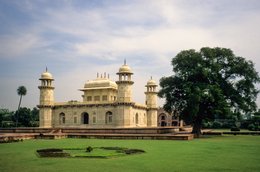
Tomb of Itimad-ud-Daulah Seen from the Garden
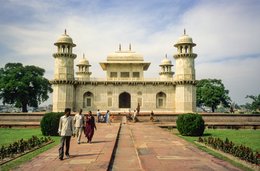
Tomb of Itimad-ud-Daulah, Approach Path
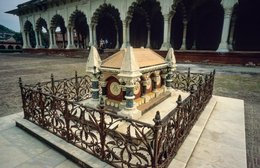
Tomb of John Russell Colvin before the Diwan-i-Aam




 "Get Link")


 "Get Link")
 "Get Link")
 "Get Link")
 "Get Link")
 "Get Link")
 "Get Link")
 "Get Link")

 "Get Link")